
Northwest Skills Institute
For EmployersAboutContact
Find a CourseTrain Your Team
All Courses
Categories
All CategoriesSafetyTechnicalQualityProductivityLeadershipCultureBusiness
Industries
All IndustriesConstructionManufacturingServices
Explore Training
Online TrainingIn-Person TrainingRecertificationCourse Guidance
For EmployersAboutContact DigitalChalk Login
Find a CourseTrain Your Team
Resources

Workforce Development

The Importance of In-Place Learning: Turning Training Into Work Performance

August 2025

Northwest Skills Institute

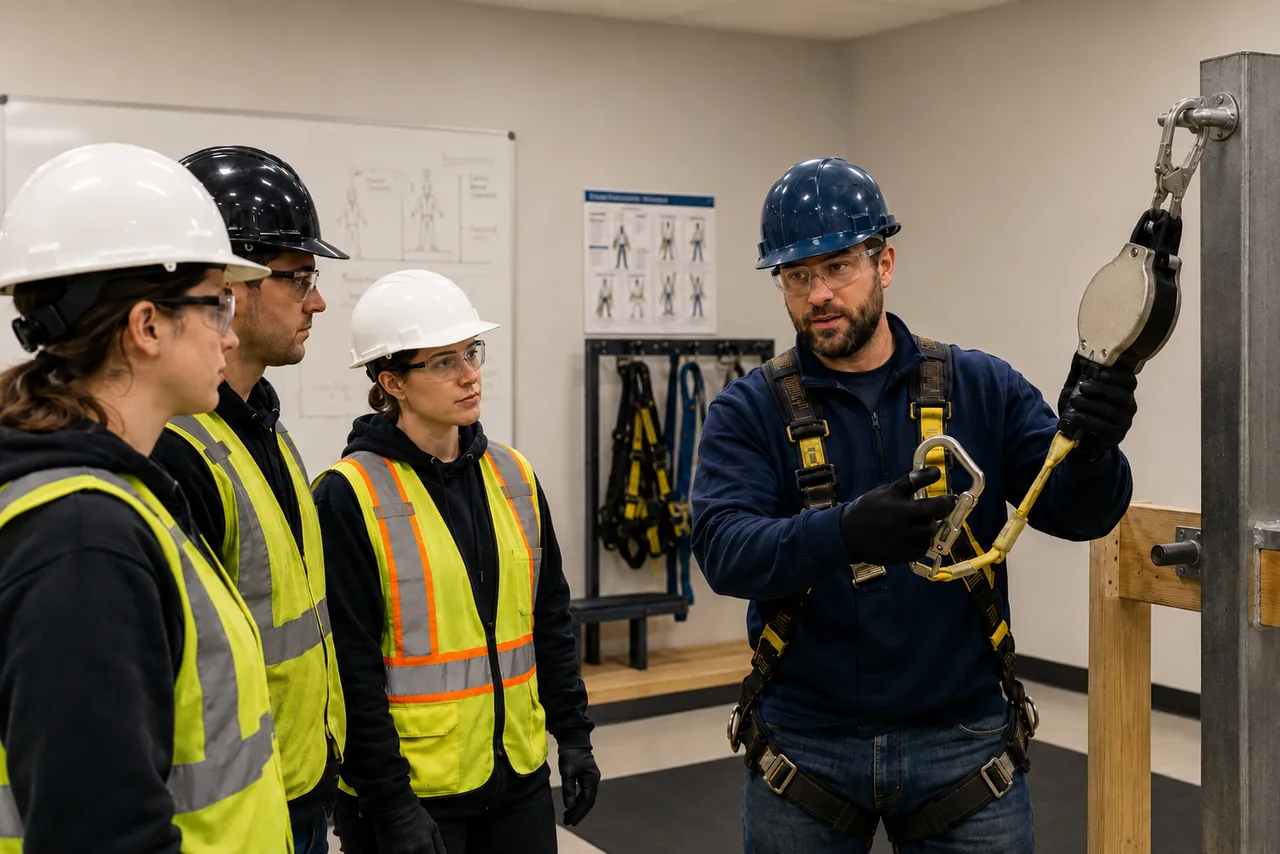
Practical training at Northwest Skills Institute

Article sections

Learning Where It Matters MostSafer, Smarter WorkplacesBuilding a Culture of Continuous Work Integrated LearningNext Level: Workflow Integrated Learning and EvaluationWhy Agile Microlearning with Northwest Skills WorksNext Steps

In-place learning is transforming how organizations train-embedding knowledge directly into the work environment where it matters most. It boosts retention, cuts errors, and turns compliance training into measurable performance gains. In today’s high-stakes industries, where safety, productivity, and employee engagement drive competitiveness, in-place learning is no longer optional-it’s essential.

Unlike traditional lecture-style training, in-place learning happens directly within the work environment or one similar to the actual work situation, allowing participants to learn by doing, in real time, and in the context of their everyday responsibilities.

Learning Where It Matters Most

Traditional classroom training is abstract and delayed. Employees can sit through a day-long lecture, then struggle to recall learning outcomes from lessons weeks later, especially if operating under pressure. By then, the knowledge has faded.

At its core, in-place learning is built around relevance. When training is delivered close to where work happens, participants are more likely to absorb, retain information, and apply what they’ve learned.

By placing learners directly into authentic work environments, practicums let them apply skills in context, gain confidence under real conditions, and receive immediate feedback from experienced mentors. This hands-on experience not only accelerates skill mastery but also helps employers evaluate talent in action-reducing onboarding time and strengthening long-term retention.

Safer, Smarter Workplaces

Instead of abstract rules, employees engaging with practical, job-specific content builds confidence and reinforces correct habits from day one.

In construction, manufacturing, healthcare, and logistics, training can’t wait for annual refreshers. Compliance and safety must be lived daily.

In-place learning ensures:

  • Real hazards are addressed, not imagined ones.
  • Habits form through repetition in the actual environment.
  • Proper tools are in hand during instruction.

The payoff? Fewer accidents, fewer errors, and stronger compliance culture is created. Every avoided incident prevents downtime and keeps projects on track.

WorkSafeBC confirms that training delivered in real or simulated settings helps employers pass safety audits and builds worker confidence in spotting hazards. That means safer teams and fewer compliance headaches.

A study in the Journal of Occupational Health Psychology found that contextualized, on-site safety training led to a 33% drop in safety incidents within six months. That’s not theory-that’s money saved, liability reduced, and people protected.

Whether it’s safety checks, leadership coaching, or customer service protocols. Tools like supervisor signoffs and quick quizzes reinforce knowledge before errors surface.

Building a Culture of Continuous Work Integrated Learning

In-place learning also plays a vital role in building a culture of continuous improvement. When learning becomes part of the daily workflow, employees are more likely to see development as a natural, ongoing process. This shift nurtures a growth mindset, sparks curiosity, encourages peer-to-peer learning, and inspires everyday innovation from the ground up.

Organizations that invest in consistent, embedded learning environments see higher employee engagement and retention. In fact, according to a LinkedIn Workplace Learning Report 2025, 94% of employees say they would stay at a company longer if it invested in their learning and development. In-place training makes that investment tangible-showing employees that development isn’t occasional, it’s ongoing.

Embedding training opportunities daily doesn’t just support individual growth; it also strengthens team cohesion. When peers learn together in a shared environment, it creates a sense of ownership and accountability that fuels long-term success.

Work Integrated learning is not just about where learning happens but also how learning is integrated into the day-to-day workflow. Microlearning-especially when delivered on-site- is one of the most effective in-place learning strategies.

For instance, the Association for Talent Development reports that companies implementing on-site microlearning sessions saw 50% higher participation rates compared to the traditional training methods. These bite-sized, task-focused lessons make it easier for teams to absorb knowledge quickly and apply it to their jobs.

Next Level: Workflow Integrated Learning and Evaluation

A further enhancement is when employers can embed training and skills verification in daily workflows. This stops learning from being an “extra” and makes it part of the work task demonstrating best practices before task commencement and self-evaluation after task completion.

Workflow Integrated Learning and Evaluation (WILE) makes it possible to access knowledge the moment it’s needed, whether it’s:

  • A safety refresher before operating machinery,
  • A leadership tactic during a shift change, or
  • A customer protocol at the point of service.

This type of cultural shift sparks curiosity, strengthens peer-to-peer learning, and fuels grassroots innovation.

Why Agile Microlearning with Northwest Skills Works

At Northwest, we believe training should never be one-size-fits-all. Our role is to work alongside industry-listening first, then co-developing training solutions that reflect the realities of a key role, occupational cluster or a specific workplace.

Whether it’s tailoring modules to unique equipment, adapting content to meet evolving regulations, or building custom programs that address company-specific standards, we design learning that fits, not forces.

This partnership approach is why learners, companies, industry associations and governments trust Northwest-not just as a training provider, but as a long-term skills development ally.

Next Steps

Ready to bring in-place learning to your team?

Identify your top three workplace skills needs, risks or rework pain points.

Schedule a discovery call and see how training can strengthen your operational competitiveness.

Resources

Workforce Development

Agile Microlearning: Trackable Training Employees Actually Use

August 2025

Northwest Skills Institute

Workplace safety training

Article sections

Timeliness: Learning Can’t Wait for a CalendarThe Skill Half-Life Is ShrinkingWhy Agile? Feedback Is the Secret SauceWorkforce Skills Are an Investment-Not a CostWhy Agile Microlearning with Northwest WorksNorthwest Skills’ 700+ Micro Modules Learning Toolbox-Zero Upkeep for YouNext Steps

Agile microlearning is transforming workforce development-delivering faster, smarter, and more engaging training that employees actually use. It strengthens technical skills, closes performance gaps, and boosts employee retention by showing staff that their employer is truly invested in their success. In today’s competitive landscape, where human capital is a company’s most valuable asset, this approach is no longer optional-it’s essential.

Just as Netflix revolutionized entertainment by letting people watch what they want, when they want, Northwest was a pioneer in bringing online training to industry-empowering employees to learn at their own pace. But unlike long-form content, agile microlearning doesn’t ask learners to binge hours of content. Think TikTok, not Netflix.

Learning is most effective when it’s focused, timely, and digestible. That’s why microlearning modules are designed to be completed in just 15-20 minutes. These short bursts of learning are easy to fit into any shift and proven to outperform day-long seminars or annual refreshers.

Still not seeing exactly what you need? Northwest is known for co-developing training content with industry partners-rapidly creating modules tailored to specific company standards, equipment, or regulatory environments.

Timeliness: Learning Can’t Wait for a Calendar

A new regulation, technical spec, or safety protocol is introduced on Monday-by Friday, it’s already been ignored, misunderstood, or misapplied. Rigid, once-a-year training cycles can’t keep pace with the rate of change. Agile microlearning can.

This approach meets workers where they are, exactly when they need new information. Whether it’s onboarding a new hire or rolling out a process change across multiple locations, agile learning keeps your team in sync, in real time.

The Skill Half-Life Is Shrinking

According to the Government of Canada’s Future Skills Report, the technical “half-life” of many industrial skills is now less than five years. Yet most employers still run training on annual cycles-by the time employees get to the classroom, the information may already be outdated.

Why Agile? Feedback Is the Secret Sauce

Each microlearning module functions like a sprint: one clear objective, one focused skill, and immediate practice. But what truly makes it agile is the built-in feedback loop. Without it, even the best video is just another passive content snack.

Think of a 15-minute module as a sprint: one objective, one skill, immediate practice. But there’s a catch: without rapid feedback, it’s just a video snack. Agile microlearning closes the loop the same day-quiz, supervisor check-off, or peer demo-so errors die before they reach the job site. The Association for Talent Development found that retention jumps 20-30 % when feedback follows within 24 hours.

Workforce Skills Are an Investment-Not a Cost

Machine downtime, low productivity, rework, and workplace accidents all have one thing in common: they’re expensive. And they’re all symptoms of poor training or slow knowledge transfer.

By contrast, building a strong culture of learning and upskilling pays measurable dividends. Smart companies recognize that workforce training is an investment in productivity, safety, and long-term profitability-not an overhead cost.

In manufacturing alone, unplanned downtime can exceed $250,000 per hour, while rework may consume 5-20% of project costs. Poor productivity, often linked to knowledge gaps, is estimated to drain 10-30% of payroll expenses. And a single workplace accident can cost $40,000 to $120,000 when both direct and indirect costs are considered.

By contrast, most organizations spend only 1-2% of payroll-about $1,000 per employee per year-on training and professional development. Yet this small investment can dramatically reduce the costly consequences of errors, delays, and unsafe work.

Why Agile Microlearning with Northwest Works

Short, focused sessions of 15-20 minutes allow workers to absorb, quiz, and apply new knowledge on the same day. Compared to traditional classroom training, this method delivers up to 50% better retention and faster results. The feedback loop locks in learning, prevents errors, and reinforces confidence on the shop floor.

Learning tools are always available (Yes, even on a Saturday night with popcorn!), diverse, customizable, and constantly updated.

The math is clear: companies routinely spend 5 to 10 times more cleaning up mistakes than they do preventing them. Smart businesses treat skills development as a strategic investment, not a discretionary expense. Building a culture of continuous learning doesn’t just improve performance-it makes the entire organization more competitive and resilient.

Investing in agile microlearning flips that equation. It delivers timely, targeted knowledge that prevents errors before they occur-boosting productivity, ensuring compliance, and protecting both people and profits.

Northwest Skills’ 700+ Micro Modules Learning Toolbox-Zero Upkeep for You

From safety basics to CNC programming tweaks, to leadership and vocational skills for critical occupations, the Northwest Skills Online Learning Library gives members access to over 700 mobile-friendly modules. Each course includes built-in assessments and supervisor check-offs-so progress is trackable without adding new software. Content is reviewed and refreshed quarterly to stay current with Canadian codes and regulations.

Show your team members that effective training doesn’t need to be time-consuming-it just needs to be agile.

Next Steps

Ready to bring agile learning to your team?

Schedule a discovery call and demo of skills development opportunities available for your teams.

Northwest Skills Institute
340-1275 Venables St.
Vancouver, BC V6A 2E4
Canada
+1 (604) 900-1980 Contact Form
DigitalChalk Login

Featured Training

JHSCAsbestos Awareness & AbatementIntroduction to Project ManagementBlueprint ReadingFall ProtectionConfined Space Entry & MonitorAdministrative ProfessionalQuality Assurance TechnicianView all courses

Browse by Category

SafetyTechnicalQualityProductivityLeadershipCultureBusiness

Explore Training

Online TrainingIn-Person TrainingRecertificationCourse Guidance

Employers

Group TrainingRequest a QuoteCourse Guidance

Support

About UsContact UsBlogFAQsPolicies

Northwest Skills Institute acknowledges and respects the traditional territories of the First Nations, Métis, and Inuit peoples upon which we and our partners carry out our work across Canada. We thank the hereditary First Peoples who continue to live on and care for these lands.

Copyright 2026 Northwest Skills Institute. All rights reserved.
Privacy PolicyAccessibility StatementTerms of Service