
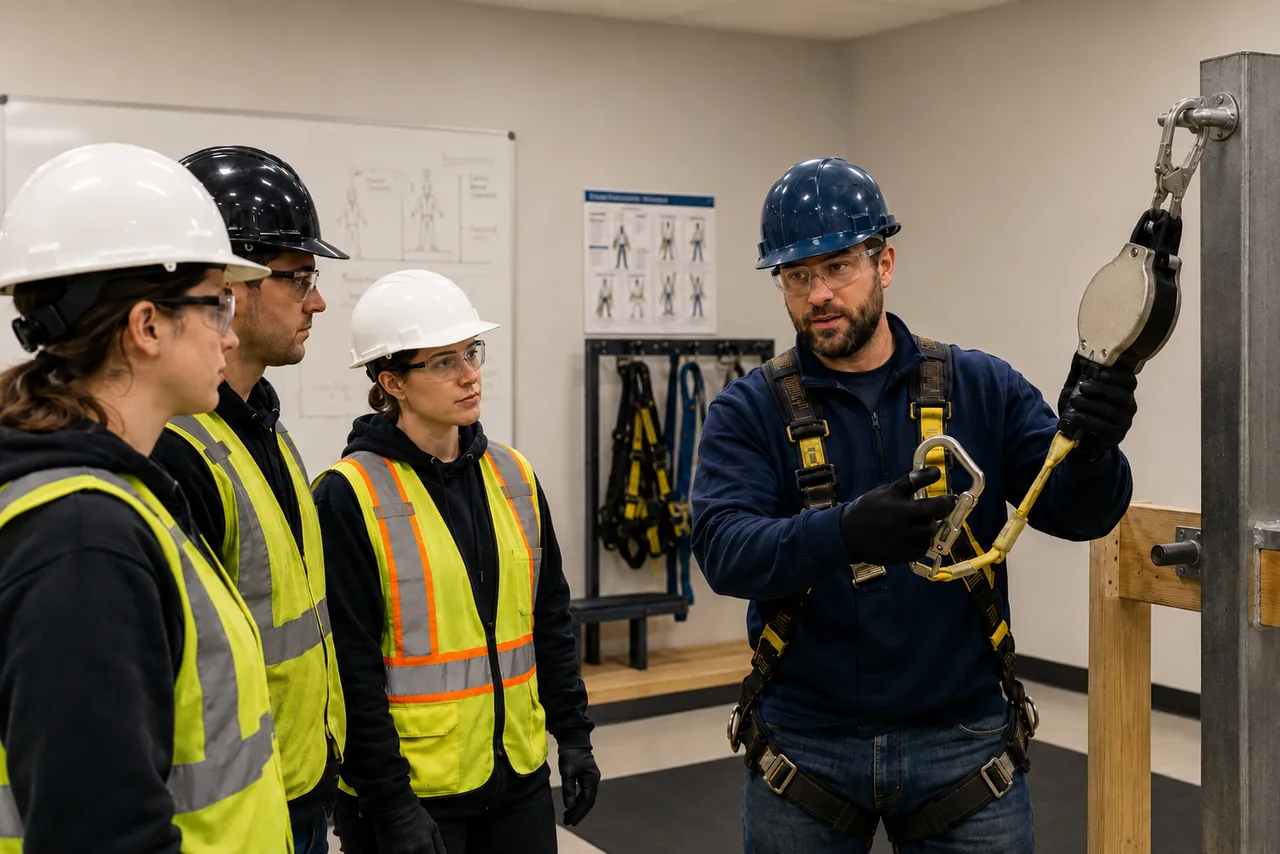
In-place learning is transforming how organizations train-embedding knowledge directly into the work environment where it matters most. It boosts retention, cuts errors, and turns compliance training into measurable performance gains. In today’s high-stakes industries, where safety, productivity, and employee engagement drive competitiveness, in-place learning is no longer optional-it’s essential.
Unlike traditional lecture-style training, in-place learning happens directly within the work environment or one similar to the actual work situation, allowing participants to learn by doing, in real time, and in the context of their everyday responsibilities.
Learning Where It Matters Most
Traditional classroom training is abstract and delayed. Employees can sit through a day-long lecture, then struggle to recall learning outcomes from lessons weeks later, especially if operating under pressure. By then, the knowledge has faded.
At its core, in-place learning is built around relevance. When training is delivered close to where work happens, participants are more likely to absorb, retain information, and apply what they’ve learned.
By placing learners directly into authentic work environments, practicums let them apply skills in context, gain confidence under real conditions, and receive immediate feedback from experienced mentors. This hands-on experience not only accelerates skill mastery but also helps employers evaluate talent in action-reducing onboarding time and strengthening long-term retention.
Safer, Smarter Workplaces
Instead of abstract rules, employees engaging with practical, job-specific content builds confidence and reinforces correct habits from day one.
In construction, manufacturing, healthcare, and logistics, training can’t wait for annual refreshers. Compliance and safety must be lived daily.
In-place learning ensures:
- Real hazards are addressed, not imagined ones.
- Habits form through repetition in the actual environment.
- Proper tools are in hand during instruction.
The payoff? Fewer accidents, fewer errors, and stronger compliance culture is created. Every avoided incident prevents downtime and keeps projects on track.
WorkSafeBC confirms that training delivered in real or simulated settings helps employers pass safety audits and builds worker confidence in spotting hazards. That means safer teams and fewer compliance headaches.
A study in the Journal of Occupational Health Psychology found that contextualized, on-site safety training led to a 33% drop in safety incidents within six months. That’s not theory-that’s money saved, liability reduced, and people protected.
Whether it’s safety checks, leadership coaching, or customer service protocols. Tools like supervisor signoffs and quick quizzes reinforce knowledge before errors surface.
Building a Culture of Continuous Work Integrated Learning
In-place learning also plays a vital role in building a culture of continuous improvement. When learning becomes part of the daily workflow, employees are more likely to see development as a natural, ongoing process. This shift nurtures a growth mindset, sparks curiosity, encourages peer-to-peer learning, and inspires everyday innovation from the ground up.
Organizations that invest in consistent, embedded learning environments see higher employee engagement and retention. In fact, according to a LinkedIn Workplace Learning Report 2025, 94% of employees say they would stay at a company longer if it invested in their learning and development. In-place training makes that investment tangible-showing employees that development isn’t occasional, it’s ongoing.
Embedding training opportunities daily doesn’t just support individual growth; it also strengthens team cohesion. When peers learn together in a shared environment, it creates a sense of ownership and accountability that fuels long-term success.
Work Integrated learning is not just about where learning happens but also how learning is integrated into the day-to-day workflow. Microlearning-especially when delivered on-site- is one of the most effective in-place learning strategies.
For instance, the Association for Talent Development reports that companies implementing on-site microlearning sessions saw 50% higher participation rates compared to the traditional training methods. These bite-sized, task-focused lessons make it easier for teams to absorb knowledge quickly and apply it to their jobs.
Next Level: Workflow Integrated Learning and Evaluation
A further enhancement is when employers can embed training and skills verification in daily workflows. This stops learning from being an “extra” and makes it part of the work task demonstrating best practices before task commencement and self-evaluation after task completion.
Workflow Integrated Learning and Evaluation (WILE) makes it possible to access knowledge the moment it’s needed, whether it’s:
- A safety refresher before operating machinery,
- A leadership tactic during a shift change, or
- A customer protocol at the point of service.
This type of cultural shift sparks curiosity, strengthens peer-to-peer learning, and fuels grassroots innovation.
Why Agile Microlearning with Northwest Skills Works
At Northwest, we believe training should never be one-size-fits-all. Our role is to work alongside industry-listening first, then co-developing training solutions that reflect the realities of a key role, occupational cluster or a specific workplace.
Whether it’s tailoring modules to unique equipment, adapting content to meet evolving regulations, or building custom programs that address company-specific standards, we design learning that fits, not forces.
This partnership approach is why learners, companies, industry associations and governments trust Northwest-not just as a training provider, but as a long-term skills development ally.
Next Steps
Ready to bring in-place learning to your team?
Identify your top three workplace skills needs, risks or rework pain points.
Schedule a discovery call and see how training can strengthen your operational competitiveness.